Review: 12 Holiday Christmas Floral Backgrounds
As a designer who spends half my day staring at stitch charts and the other half troubleshooting tension issues on vintage machines, I don’t just look for "pretty" when I’m scouting new assets. I look for viability. I need to know if a design will hold up under the stress of production, how it translates from screen to fabric, and whether it adds enough value to justify the time it takes to hoop, stitch, and finish.
This is where 12 Holiday Christmas Floral Backgrounds caught my attention. The category is listed as Illustrations, which immediately signals that we are dealing with a vector or raster graphic source rather than a pre-digitized machine file. For those of us in the craft business looking to create unique custom apparel or handmade product lines, this distinction is crucial. It means we have the flexibility to adapt the art, but it also requires a bit more technical know-how to ensure the final result looks professional rather than amateurish.
The First Impression: Mood and Layout
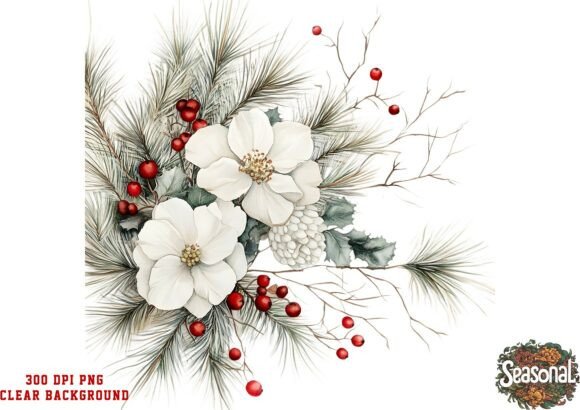
When you first open the 12 Holiday Christmas Floral Backgrounds pack, the immediate takeaway is cohesion. In the world of holiday design, there is often a clash between traditional red-and-green nostalgia and modern minimalism. This collection strikes a balance that feels sophisticated yet festive. The floral elements aren’t just generic holly; they appear to be curated botanical arrangements—perhaps eucalyptus, ranunculus, or winter roses—interspersed with classic seasonal accents.
From a layout perspective, these backgrounds are designed to fill space without overwhelming it. As an Etsy seller or small shop owner, you know that negative space is your friend. These designs provide a rich texture that can serve as a backdrop for monograms, names, or smaller focal graphics. The visual personality is warm and inviting, making it perfect for the current trend toward cozy, homey aesthetics in holiday decor and gifts.
The detail level is high, which is both a strength and a potential pitfall. The intricate line work suggests depth and elegance, but it demands respect during the digitizing or printing process. If you are planning to use these as design assets for sublimation or direct-to-garment (DTG) printing, they will shine. However, if you are converting them into a machine embroidery design, you need to be strategic about how you interpret those fine details.
Real-World Application: From Screen to Stitch
Let’s talk about a specific scenario. Imagine you are preparing a batch of custom embroidered tote bags for a local holiday market. You want something that stands out on a rack of generic "Merry Christmas" bags. You choose one of the Holiday Christmas Floral Backgrounds to frame a client’s name in the center.
In this context, the background serves as a border or a full-coverage motif. Because it is an illustration-based asset, you would likely trace key elements into your digitizing software. Here is where the practical judgment comes in. A dense floral pattern can become a muddy mess if every tiny petal is converted to a satin stitch. Instead, a skilled approach might involve using a combination of techniques:
- Satin Stitch for the main outlines of leaves and stems to give them definition.
- Fill Stitch for larger leaf areas, keeping the density moderate to prevent fabric puckering.
- Running Stitch for delicate wire-like details or centers of flowers, adding a hand-drawn feel.
This mixed-stitch approach preserves the illustrative quality of the original embroidery file while ensuring the garment remains comfortable and durable. When finished, the product has a high perceived value. Customers see the complexity and assume a higher price point, allowing you to maintain healthy margins on your small shop product.
Similarly, for apron embroidery or kitchen towel designs, these backgrounds work beautifully as all-over prints or corner motifs. The floral theme pairs naturally with kitchen aesthetics, evoking a sense of homemade baking and warmth. It’s a subtle upgrade from standard text-only designs, offering personalized gift options that feel thoughtful and curated.
Where to Exercise Caution
No design is universal, and 12 Holiday Christmas Floral Backgrounds is no exception. There are specific situations where this asset might struggle if not handled with care.
First, consider hoop size limitations. If you are working with a limited hoop area, such as on a baseball cap or a small baby onesie sleeve, the intricate details of the floral background may lose clarity. Tiny petals can merge together, creating a blobby appearance rather than distinct shapes. In these cases, it is better to simplify the design or crop it to focus on a single, strong element rather than the entire complex background.
Second, be mindful of fabric texture. Embroidering over heavily textured fabrics like bouclé wool or thick chenille can obscure the fine lines of the illustration. The needle might get lost in the weave, leading to inconsistent placement. Thin or stretchy knits also pose a risk; without proper stabilization, the tension required to stitch detailed florals can pucker the fabric, ruining the drape of the finished product.
Dark fabrics present another challenge. If the original illustration relies on white or light-colored highlights for contrast, stitching these onto a black sweatshirt or navy tote bag will require extensive underlay and potentially multiple thread colors to achieve visibility. Always test thread color contrast before committing to a large run. What looks crisp on a backlit monitor can disappear against dark denim.
Technical Notes for the Discerning Designer
To ensure your projects using 12 Holiday Christmas Floral Backgrounds meet professional standards, keep these practical tips in mind:
- Test on Scrap Fabric: Never go straight to the final garment. Stitch the design on a scrap piece of the same material to check for pull, distortion, or color bleeding.
- Check Stitch Density: High-density designs take longer to stitch and wear out needles faster. Aim for a balanced density that allows the fabric to show through slightly, giving the embroidery a softer, more premium look.
- Inspect Small Details: Zoom in on your digitizing software. Are the smallest elements too thin to stitch reliably? If so, consider combining adjacent lines or simplifying the shape.
- Use Proper Stabilizer: The right stabilizer is non-negotiable. For woven fabrics like cotton aprons, a cut-away stabilizer provides long-term support. For knits, a tear-away or water-soluble backing might be appropriate depending on the weight of the stitch.
- Black and White Mockups: Convert your digital mockup to grayscale. This helps you evaluate the composition and contrast without being distracted by color, ensuring the design holds up visually regardless of thread choice.
Final Verdict
12 Holiday Christmas Floral Backgrounds is a versatile and aesthetically pleasing resource for designers who want to elevate their holiday offerings. It bridges the gap between digital illustration and tangible craft, offering endless possibilities for commercial embroidery, apparel decoration, and digital product previews.
Whether you are creating holiday gifts for friends, expanding your Etsy listings, or branding your own boutique line, these backgrounds provide a solid foundation. They convey professionalism and care, qualities that resonate with buyers looking for handmade authenticity. Just remember that the success of the final product depends on your execution. Take the time to digitize thoughtfully, choose your materials wisely, and always prioritize the wearer’s comfort alongside the visual impact.
For those willing to put in the technical groundwork, this asset pack offers significant return in terms of creativity and customer engagement. It is a smart addition to any designer’s library for the upcoming season.